
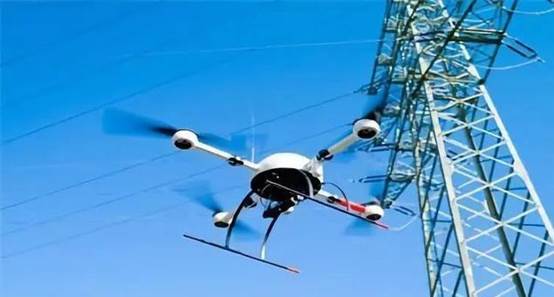
With economic development and the rapid increase in electricity demand, high-voltage transmission lines are extending to all corners of society, leading to a rapid increase in the workload of high-voltage line inspection. Electricity demand comes from social production and daily life, but electricity production is concentrated in specific environments and regions such as thermal power plants, hydropower plants, wind farms, and solar power plants. The development of my country’s power industry has led to a continuous increase in the number of power grids and their coverage area. The contradiction between dispersed demand and relatively concentrated power production poses challenges to the construction and development of the transmission grid.
The large and dispersed transmission grid bears the heavy responsibility of power distribution. Because transmission line equipment is exposed to the elements for extended periods, it is subject to continuous mechanical stress, lightning strikes, material aging, icing, and human factors, resulting in phenomena such as tower collapse, broken strands, wear and tear, corrosion, and conductor galloping. If these issues are not addressed promptly, they can seriously affect the operation of the power grid and the power supply. Insulators also experience high-voltage discharge and insulation degradation due to tree growth and lightning damage, which can also lead to transmission line accidents. Furthermore, unexpected events such as the theft of transmission towers must be dealt with promptly.
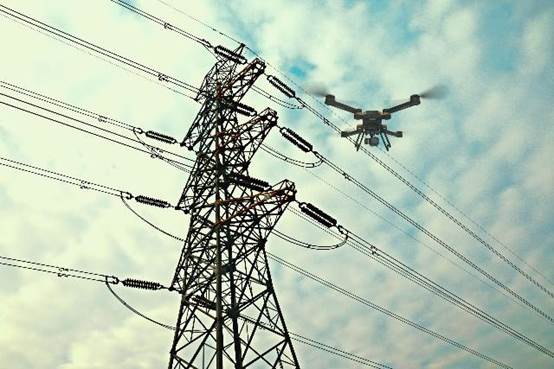
Inspection involves checking relevant power equipment to identify and eliminate potential hazards in a timely manner. Substations, transmission stations, transmission towers, and the transmission and distribution networks of power plants all require daily inspection and maintenance. In particular, the environments of transmission towers, lines, and substations involve a large number and variety of interconnected equipment. Due to the length of the lines, if potential hazards are not eliminated promptly, it can lead to malfunctions, seriously affecting normal production and daily life in surrounding areas, and even causing personal injury. High-altitude work and the complex and varied terrain of mountainous areas and dense river networks require a large number of personnel for maintenance, posing a threat to both human life and national property.
Traditional manual line inspection methods are not only labor-intensive, complex, rigorous, time-consuming, and dangerous, but also particularly challenging for inspecting transmission lines in mountainous areas and across large rivers, as well as during ice storms, floods, earthquakes, landslides, and at night. The mountainous terrain makes inspection difficult and consumes a large amount of manpower. For certain special line areas and inspection projects, manual line inspection methods are currently difficult to complete.
Previously, inspections were mainly carried out manually, but major accidents still occurred from time to time due to inadequate inspections. The reasons for these accidents are mostly due to negligence or fatigue of the inspection personnel. Even with complete and rigorous inspection procedures, loopholes caused by human error are unavoidable. Furthermore, the numerous inspection steps lead to personnel shifting responsibility and shirking blame. The types of faults in power equipment and facilities are diverse, and some faults are difficult to detect and maintain manually, even threatening the personal safety of workers.
Transmission lines are mostly located in sparsely populated suburbs, far from city centers. Lines requiring special inspection and maintenance account for 20% of all lines. The difficulty of operation and maintenance, and the high quality requirements, have led to a decreasing number of people willing to engage in inspection work. According to data, the average annual growth rate of transmission line operation and maintenance personnel in my country is less than 3%, and the shortage of personnel reached 34% by the end of 2019. The problems of a small number of professional inspection personnel, low manual efficiency, and high risk factors are becoming increasingly prominent. According to incomplete statistics, from 2014 to 2018, there were 238 accidents involving personal injury and death caused by overhead line inspections in China, and economic losses due to transmission line failures amounted to billions of yuan. To address the increasingly prominent contradiction between the number of power transmission professionals and the continuous growth of equipment scale, and to reduce the operation and maintenance costs of power plants and power lines and improve the utilization rate of power equipment and facilities, it is imperative to explore more scientific and reasonable power line inspection methods that can replace manual labor.
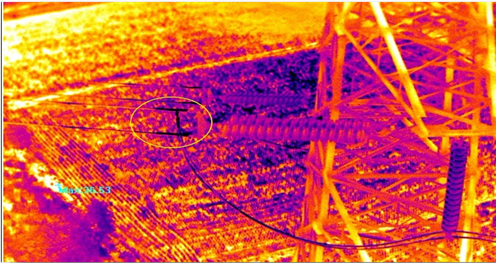
Traditional manual line construction and inspection methods are gradually transitioning to drone-based line inspection, fixed-wing aircraft inspection, and helicopter inspection. However, these methods have disadvantages such as complex operation, long preparation time, and inability to hover precisely. Various drone inspection methods have been developed to address the line inspection tasks in these complex situations. As an emerging technology, drones have successfully brought a glimmer of hope for finding efficient and safe inspection methods, and have become one of the important inspection tools in the power industry. Unlike traditional power transmission and distribution operation and maintenance management models, which are greatly affected by the environment and have low labor efficiency, drones have strong anti-interference capabilities and high efficiency. They can operate in mountainous areas, areas with significant route changes, or complex spatial environments. Power line inspection drones can perform detailed inspection tasks, using visible light equipment to inspect the main body and auxiliary facilities of power lines; routine inspection tasks, using visible light equipment to inspect the channel environment, poles, foundations, insulators, etc.; and also perform specialized inspection tasks using radar and infrared instruments.
Compared with traditional manual inspection methods, drone-based power line inspection has the advantages of being faster, more convenient, and safer. Firstly, it improves efficiency and accuracy, with a high defect detection rate. Traditional power line inspection methods usually rely on manual and vehicle inspections, which are not only time-consuming but also greatly affected by terrain and weather conditions. Relying solely on human inspection is a huge safety hazard; inspectors find it difficult to detect all potential problems, and in the operation of the power grid, any minor safety issue can cause accidents, leading to large-scale power outages and huge economic losses. In contrast, drone-based power line inspection offers higher efficiency and accuracy. Drones can carry various sensors and high-definition cameras to conduct comprehensive, high-definition photography of transmission lines. Through image recognition and data processing technology, line defects can be automatically detected and classified, effectively improving the accuracy and reliability of inspections. At the same time, drone-based power line inspection can significantly shorten the inspection cycle and improve the efficiency of power grid operation. According to statistics, the efficiency of drone inspection is 8-10 times that of manual inspection (considering that drones can complete operations at high altitude under live power conditions, without the need for power outages for inspection, the efficiency is 40 times higher than manual line inspection).
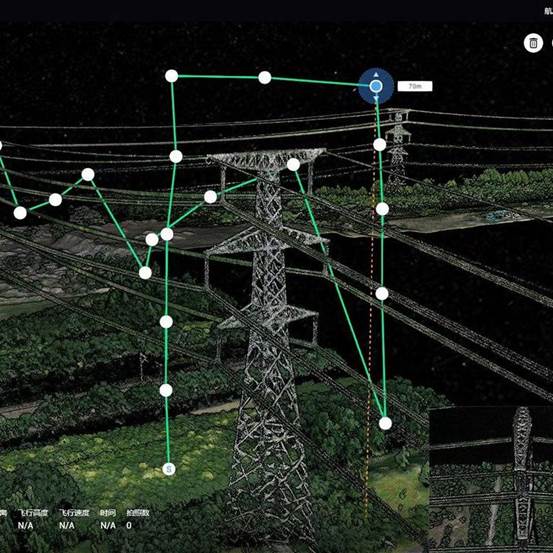
Secondly, it avoids safety accidents and ensures personnel safety. Power grid facilities are usually located in remote areas with complex environments and many dangerous factors. Traditional inspection methods require personnel to climb power poles or towers, which is not only labor-intensive and inefficient but also poses certain safety risks. In contrast, drone-based power line inspection is safer and more reliable. When performing power line inspections, personnel can remotely control the drone, avoiding direct contact with high-voltage lines and effectively reducing safety risks. In addition, drones can adapt to various harsh environments, such as high mountains, deserts, and swamps, providing the possibility of comprehensive coverage of power grid facilities and further ensuring the safe operation of the power grid. Thirdly, it promotes the construction of smart grids. Smart grids represent the future direction of power grid development, and drone-based power line inspection plays a crucial role in promoting the construction of smart grids. Firstly, drones can carry various sensors to monitor the power grid’s operating status in real time, providing strong support for dispatching decisions. For example, during power grid construction, drones can assist in planning power line routes, improving the accuracy and efficiency of route selection; in disaster prevention and mitigation, drones can conduct rapid and accurate assessments of affected areas, providing strong support for rescue and recovery efforts.
In short, drone-based power line inspection offers numerous advantages, including high efficiency, high accuracy, and high safety, bringing about a revolutionary transformation in the power industry.
Leave a Reply